
For those who suffer with angina and angina attacks, keeping their condition managed is essential for them to go about their day-to-day lives relatively unaffected. Unfortunately however, this is often easier said than done. Angina medication and a change of lifestyle can do a lot but what is there that people suffering from angina can do to more effectively manage their condition.
So many other medical conditions have a range of natural remedies and treatments that can be supplemented alongside existing medication, and the same is true for angina. In fact, Neprinol AFD, a product we sell here at Advanced Supplements, has many qualities which make it one of the best supplements for angina. So, we’re here to talk in a lot more detail about what angina is, how Neprinol AFD can be an effective treatment, and what other kinds of natural treatments and therapies can help people manage their angina more effectively?
What Is Angina?
It’s a common misconception, but angina is not actually a disease. Rather, it is a symptom of atherosclerosis (or the narrowing of the arteries) which causes a person to feel tightness in the chest, pain and a range of other uncomfortable symptoms such as dizziness and pain.
Angina is suffered by over 100 million people around the world, although because some cases can be less severe, this number could in fact be higher, with some people yet to have their symptoms diagnosed as angina.
An angina attack can occur when there is an increased demand for blood by the heart muscle, but the coronary arteries are unable to adequately supply that blood because of blockage. This is why people suffering from angina commonly experience symptoms while engaged in some physical activity, such as jogging, lifting a heavy object or walking up a flight of stairs.
The 4 Different Types Of Angina
Like any medical condition, angina comes in different forms, all of which will affect a person in different ways when symptoms present. In angina’s case, there are 4 different types that a person can suffer from. These are as follows:
Stable angina: This is the most common type of angina, also known as angina pectoris. It occurs when the heart muscle doesn’t receive enough oxygen-rich blood due to a partial blockage in one or more of the coronary arteries. The pain or discomfort is usually predictable and occurs during physical activity or emotional stress. It can be relieved by rest or medication.
Unstable angina: This type of angina is more serious than stable angina and requires immediate medical attention. It occurs when there is a sudden and unexpected decrease in blood flow to the heart, causing severe chest pain or discomfort. The pain may occur at rest or with minimal exertion and may last longer than stable angina. Unstable angina can be a sign of a heart attack which is why it requires emergency treatment.
Variant angina: Also known as Prinzmetal’s angina, this type of angina is rare and occurs when there is a spasm in the coronary artery that reduces blood flow to the heart. The pain or discomfort usually occurs when a person is resting however it is often severe. Variant angina can be controlled with medication, but due to its nature, even lifestyle changes can have little positive effect on managing the condition.
Microvascular angina: This type of angina is caused by a problem with the small blood vessels in the heart, known as micro vessels. The pain or discomfort is often similar to stable angina, but can be more difficult to diagnose because there is no visible blockage in the coronary arteries, as there would be with stable angina. Again, the common triggers of microvascular angina match that of stable angina in that it is often triggered during physical activity or by emotional stress.
What Are The Symptoms Of Angina?

The symptoms of angina may vary. Angina pain is usually – but not always – experienced as a heavy pressure or a crushing sensation in the chest. At other times it may be a vague and only slightly noticeable ache. It can be located in the neck or shoulders and may radiate down the left arm and even into the fingers.
It may also radiate into the jaw and the head, through to the back, or even down into the upper abdomen. In the case of an angina attack it is also common for sweating and dizziness to also occur. Variant angina differs from typical angina in that it is characterised by pain at rest, rather than upon exertion, caused by spasms of the large coronary arteries. In unstable angina, the symptom pattern changes, and pain becomes more severe or more frequent. Unstable angina is very serious, usually caused by coronary artery obstruction. This is a medical emergency, as the risk for heart attack is very high.
Serrapeptase & Nattokinase Help Reduce The Risk Of Angina
There are two enzymes in particular which have been shown to have qualities that not only help to reduce the risk of a person developing angina, but also for those suffering from the condition to better manage their angina. Serrapeptase and Nattokinase are both powerful natural enzymes that help regulate different parts of our cardiovascular systems and promote healthy blood flow and blood pressure in our bodies.
First off, Serrapeptase. This is a proteolytic enzyme that is derived from the Serratia bacteria found in the intestines of silkworms. It has been shown to have anti-inflammatory and fibrinolytic effects, and therefore can help reduce the build-up of plaque in our arteries, one of the leading causes of angina and other cardiovascular diseases. In one study in particular, serrapeptase was found to significantly reduce the incidence of angina attacks and improve subjective symptoms in patients with chronic airway disease and other associated cardiovascular diseases.
Nattokinase on the other hand, is a fibrinolytic enzyme that is derived from the fermented soybean product natto. It has been shown to help dissolve blood clots and improve circulation, which like serrapeptase allows it to reduce the build-up of plaque in a person’s arteries. Nattokinase has been found to significantly improve blood flow and reduce the incidence of angina attacks in patients with stable angina, making it an effective natural treatment for angina.
Therefore, Use Neprinol Supplements For Angina
Neprinol AFD supplements contain a refined and potent blend of both Serrapeptase and Nattokinase. As such, these powerful supplements can significantly boost a person’s ability to manage their angina, and even for those unaffected by the condition but still at risk, they can use Neprinol to help prevent symptoms from developing.
Because the blend of enzymes and other ingredients in Neprinol centres around the body being able to break down and process more fibrin, it allows people to therefore remove fibrous plaque from their bloodstream. This plaque, when built up in large quantities within a person’s arteries can be what causes angina to develop and increase their likelihood of angina attacks.
When combined with other enzymes and natural ingredients in Neprinol, such as bromelain, papain, and CoQ10, serrapeptase and nattokinase may have a synergistic effect, improving the overall efficacy of the supplement in preventing and managing angina.
So, if you find yourself being one of the millions of people that are looking for natural ways to manage and/or prevent angina, look no further than Neprinol AFD. A complete enzyme supplement blend used by thousands of people who suffer from cardiovascular diseases.
Buy Neprinol AFD

Neprinol & Other Kinds Of Enzyme Therapy For Angina
Did you know that enzymes could help prevent and manage angina pectoris by removing the root cause of the disease, the buildup of fibrin in the coronary arteries? One of the main causes of excessive fibrin buildup is a decrease in the amount of plasmin, a natural enzyme that breaks down excess fibrin. Without enough plasmin, the body can’t keep up with the ongoing deposition of fibrin and lipids in the blood vessels, leading to restricted blood flow and eventually angina pectoris.
Whilst we have covered Neprinol in great detail above, below are two either natural enzyme supplements for angina which we retail.
Serrétia & Nattovena Supplements For Angina
Whilst Neprinol contains a balance of both Serrapeptase and Nattokinase in its enzyme blend, making it the ideal first choice angina natural supplement. Some people may respond better or may only be able to take supplements of one of these enzymes.
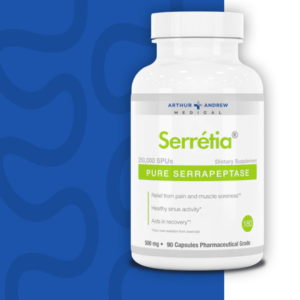
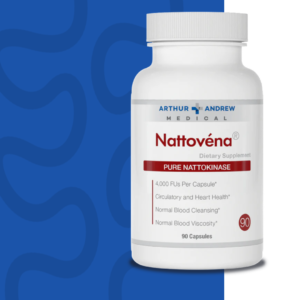
Below we have both Serrétia and Nattovena enzyme blends. Serrétia is a high potency dose of serrapeptase while Nattovena is a refined supplement containing higher doses of nattokinase.
Buy Serrétia Supplements
Buy Nattovena Supplements
More Angina FAQs

Angina is a condition that often scares or worries people when experiencing it for the first time. As a result there are so many questions that people have about the condition, suffering from an Angina Attack can be just as traumatic as a heart attack for people in severe cases. So, we want to dispel some common myths and help provide a little more clarity around some of the more frequently asked questions when it comes to angina.
Is Angina Life Threatening?
Angina is a serious medical condition that can be life-threatening if left untreated. While angina itself is not a heart attack, it is a warning sign that there may be an underlying heart condition that needs to be addressed. If left untreated, angina can lead to a heart attack, which can be life-threatening.
What Are The First Signs Of Angina?
The first signs of Angina can vary depending on the individual and indeed which kind of angina they are suffering from, but common signs include discomfort, pressure, or a burning sensation in the chest. Angina can feel like a weight or heaviness on the upper abdomen that won’t go away. You may also experience soreness or stiffness in your limbs, neck, jaw, shoulder, or back, as well as nausea, disorientation, or loss of breath.
What Can Cause Angina?
Angina is most commonly caused by coronary artery disease (CAD). This is the build-up of plaque in the arteries that supply the heart with blood, constricting them and making our hearts have to work harder. There are also lifestyle factors that can contribute to the development of angina including obesity and smoking. While other conditions like Diabetes, high cholesterol, and hereditary heart disease are also contributing factors to a person developing angina.
Does An Electrocardiogram (ECG) Show Angina?
An electrocardiogram (ECG) can help diagnose angina by detecting changes in the electrical activity of the heart. However, an ECG does not always show evidence of angina, particularly if the symptoms occur intermittently or are not present at the time of the test.
During an ECG, electrodes are placed on the skin on different parts of a person’s body. These are; the chest, arms, and legs. The machine then measures the electrical impulses generated by the heart. If there is a blockage or narrowing in the coronary arteries that supply the heart with blood, then the ECG may be able to show that a person has angina.
What Age Do People Normally Get Angina?
Angina is more common in older adults, particularly those over the age of 50. However, it is possible for people of any age to develop angina, particularly if they meet any of the other increased risk factors such as high blood pressure, smoking, diabetes, or a family history of heart disease.
As a general rule, a person’s risk of angina will increase as they age, simply due to our cardiovascular health declining as our hearts, blood vessels and arteries age.